Most homeowners use chimney sweeping and chimney cleaning as if they mean the same thing. Contractors use both terms too, which makes it even more confusing. But they are not identical services and knowing the difference helps you ask the right questions, book the right service, and keep your fireplace running safely all year.
Here is a clear, no-confusion breakdown of what each service covers, when you need each one, and why neither should be skipped.
What Is Chimney Sweeping?
Chimney sweeping is the traditional maintenance practice of removing soot, creosote, and loose debris from the interior of the chimney flue. It is a targeted service, focused specifically on the flue channel that carries combustion gases and smoke out of your home.
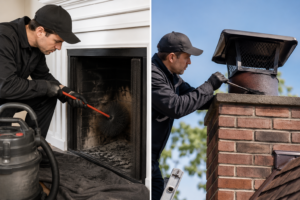
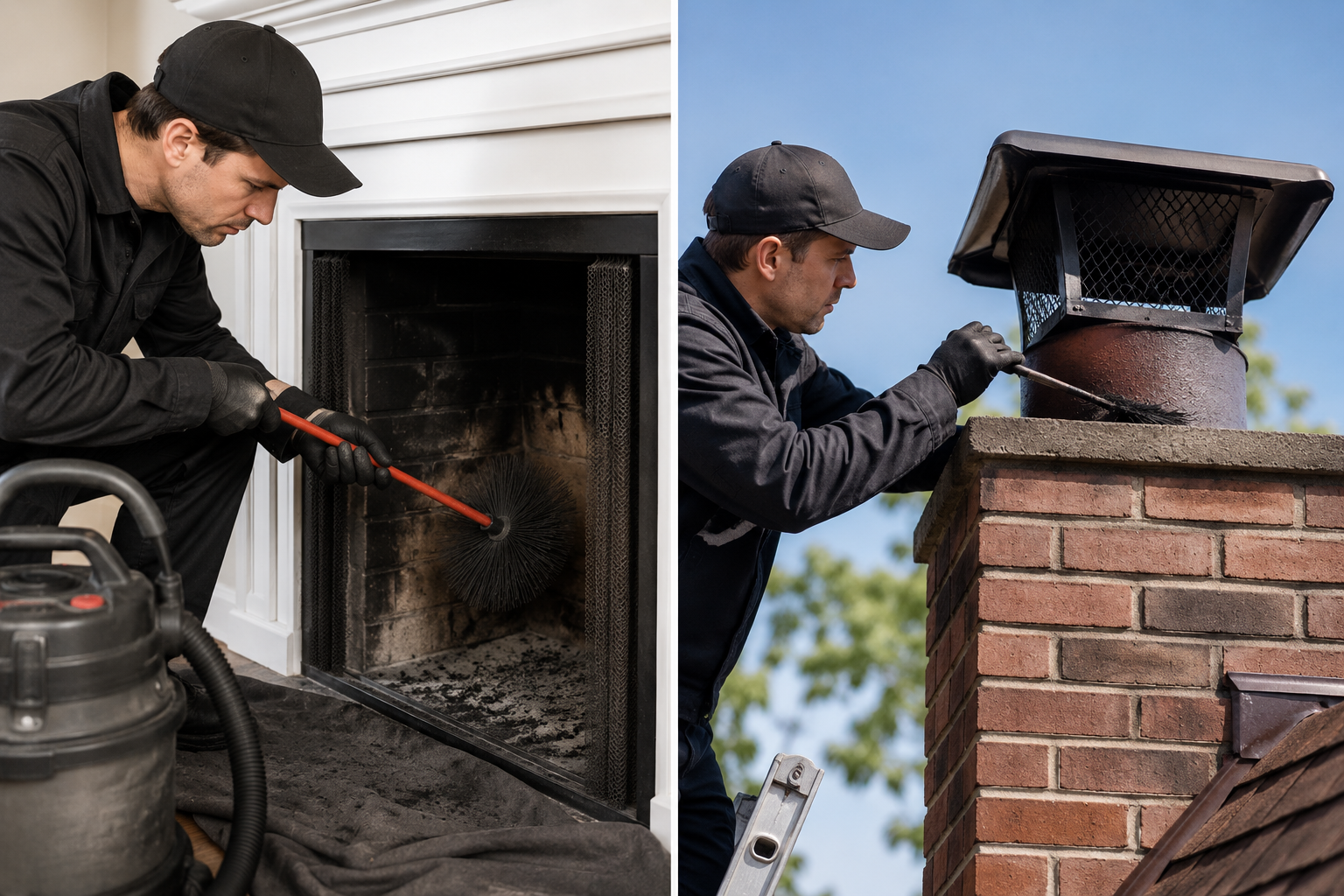
A chimney sweep uses long-handled brushes, flexible rods, and industrial-grade vacuums to scrub the flue walls from top to bottom (or bottom to top, depending on the chimney type and the technician’s approach). The goal is to clear out the buildup that accumulates every time you burn wood. Homeowners searching for a reliable Chimney Sweep in Atlanta or Chimney Sweep in Alpharetta service should ensure the company performs a full flue assessment along with debris removal.
What Does Chimney Sweeping Remove?
- Soot: the fine black powder that coats flue walls after every fire
- Creosote: the sticky, tar-like, and highly flammable residue produced by burning wood
- Loose debris: leaves, twigs, and small blockages that fall into the flue
- Animal nesting material: birds, squirrels, and raccoons frequently nest in uncapped chimneys
Creosote is the primary concern. It builds up in three stages. Stage one is a light, flaky deposit that brushes off easily. Stage two is a harder, tar-like coating. Stage three is a dense, glazed buildup that is extremely difficult to remove and dangerously flammable. Regular sweeping prevents creosote from ever reaching stage two or three.
How Often Should You Have Your Chimney Swept?
The National Fire Protection Association (NFPA) recommends chimney sweeping at least once a year for active wood-burning fireplaces. If you burn frequently more than a few times per week through the heating season you may need it twice a year. A certified technician can assess the buildup level during a visit and tell you what your specific usage pattern requires. Many homeowners who hire a Chimney Sweep in Roswell service schedule annual maintenance before winter begins to avoid peak-season delays.
What Is Chimney Cleaning?
Chimney cleaning is the broader service. It includes everything a chimney sweep covers, plus a more thorough assessment and cleaning of the entire chimney system, not just the flue interior.
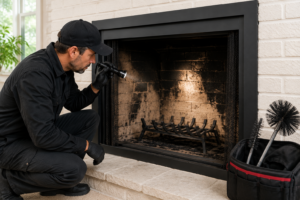
A professional chimney cleaning addresses the firebox (where the fire burns), the smoke chamber, the smoke shelf, the damper mechanism, and in many cases the exterior components like the chimney cap and crown. It may also involve chemical treatments for stubborn creosote deposits that brushes alone cannot remove.
Think of sweeping as maintenance and cleaning as a more comprehensive service that restores the whole system to proper working condition.
What Does Chimney Cleaning Cover?
- Everything included in a chimney sweep
- The firebox cleared of ash, soot, and debris
- The smoke chamber and smoke shelf removed of creosote accumulation
- The damper checked for proper function, cleared of buildup that affects movement
- The chimney cap checked and cleared of nesting material or blockages
- Chemical treatment for heavy or glazed creosote deposits (when needed)
- Documentation of the system’s overall condition
At CFC Clean Fix Chimneys in Roswell, GA, chimney cleaning visits include a thorough inspection of each component not just a brush-and-go job so homeowners leave with a clear picture of what was found and what, if anything, needs attention next.
Why the Distinction Matters for Roswell Homeowners
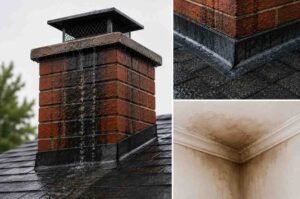
In Roswell, GA, chimneys take a beating from the local climate. Humid summers accelerate moisture damage inside the flue. Mild winters mean homeowners often burn fires later into the season than they expect. Many homes in the area, particularly older properties near Roswell Road, Canton Street, and the historic districts have masonry chimneys that require more frequent attention than newer pre-fabricated systems.
If you book a sweep when you actually need a full cleaning, the technician may remove the surface buildup but miss the hardened stage-two or stage-three creosote that has accumulated over years of use. That leftover buildup does not become less dangerous just because the top layer is gone.
Knowing which service your chimney actually needs to sweep or clean starts with an honest assessment of how long it has been since the last service and how often you use the fireplace.
Do You Need a Sweep, a Cleaning, or Both?
Here is a practical guide based on your situation:
Schedule a chimney sweep if:
- You use your fireplace regularly and had it serviced within the past year
- You burn seasoned hardwood and notice only light soot accumulation
- You are heading into a new burn season and want a routine tune-up
Schedule a chimney cleaning if:
- You have not had any chimney service in two or more years
- You recently moved into the home and have no record of prior maintenance
- There is a visible dark, sticky residue inside the firebox or on the damper
- You notice smoke backing up into the room or persistent odors from the fireplace
- You have experienced a small chimney fire, even one that seemed minor
Schedule both together if:
- You are a new homeowner with no chimney history
- It is the start of a new heating season and you want a complete reset
- You have had heavy fireplace use throughout the previous winter
Many reputable chimney companies including CFC Clean Fix Chimneys combine both services in a single visit, which is more efficient and gives you a complete picture of your chimney’s condition in one appointment.
What About Chimney Inspections — Are They the Same Thing?
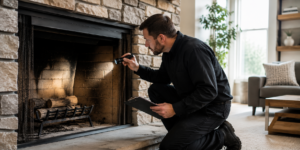
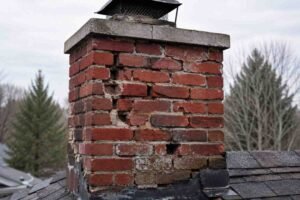
No. A chimney inspection is a separate service from both sweeping and cleaning. An inspection assesses the structural condition of the chimney system, checking the flue liner for cracks, evaluating the mortar joints, examining the chimney crown and cap, and reviewing the flashing. Cleaning removes buildup. Inspection evaluates structure and safety. Both are necessary, and neither replaces the other.
The NFPA recommends that every chimney receive an annual inspection in addition to regular sweeping or cleaning. A technician may combine an inspection with a cleaning visit, but make sure you confirm what is included before you book.
How to Prepare for Either Service
Whether you book a sweep or a full cleaning, a few simple steps make the visit go smoothly:
- Remove any logs, grates, or ash from the fireplace opening
- Clear the area around the fireplace of rugs, furniture, and valuables
- Secure pets away from the work area
- Make sure the chimney cap is accessible from the roof if the technician needs roof access
A good chimney technician will use drop cloths and an industrial HEPA vacuum to ensure no soot or debris enters your living space during the service.
Final Thought
Chimney sweeping and chimney cleaning are related but not the same. Sweeping targets the flue and handles routine creosote removal. Cleaning goes further covering the full system and addressing heavier buildup that a basic sweep cannot handle.
For most Roswell homeowners, a combined sweep and cleaning once a year covers everything needed to keep the fireplace safe, efficient, and ready for the heating season. If your last service was more than a year ago, or you moved into the home without any chimney records, a full cleaning is the right starting point.
Do not wait until you smell smoke, see black deposits around the damper, or notice a draft problem. By that point, the issue has been developing for a while. Schedule your service before the season starts and use your fireplace with confidence all winter long.
Frequently Asked Questions
Is chimney sweeping the same as chimney cleaning?
Not exactly. Sweeping specifically refers to removing soot and creosote from the flue interior using brushes and rods. Cleaning is a broader service that covers the entire chimney system firebox, smoke chamber, damper, and more. In practice, many companies use the terms interchangeably, so always ask what is specifically included before you book.
How often does a chimney need to be swept in Roswell, GA?
For active wood-burning fireplaces, once a year is the standard ideally scheduled in late summer or early fall before the heating season. Roswell’s humidity can accelerate moisture-related deterioration, so consistent annual service is especially important for masonry chimneys in this area.
Can I sweep or clean my chimney myself?
You can attempt basic soot removal with a chimney brush kit, but DIY chimney work carries real risks. Creosote exposure is a health hazard; it is carcinogenic and damages the lungs. More importantly, a homeowner cannot properly assess the condition of the flue liner, identify stage-two or stage-three creosote, or check structural components that require a trained eye. Professional service is always the safer choice.
What happens if I never get my chimney swept or cleaned?
Creosote builds up over time. Once it reaches stage three a dense, glazed coating it becomes extremely difficult to remove and can ignite during a fire, causing a chimney fire that reaches temperatures above 2,000°F. Beyond fire risk, blocked flues can force carbon monoxide back into your living space, which is a silent and potentially fatal hazard. Regular sweeping is the single most effective way to prevent both.
Does chimney cleaning include an inspection?
It depends on the company. Some providers include a basic visual check with every cleaning visit. Others offer inspection as a separate, more detailed service. Always confirm with your chimney company what the visit includes, especially if you are a new homeowner or have not had service in several years.
How long does chimney sweeping or cleaning take?
A standard chimney sweep takes 45 minutes to one hour. A full chimney cleaning, especially one that includes a more thorough assessment, typically runs one to two hours. The time can vary based on the size of the chimney, the amount of buildup, and whether additional components like the smoke chamber require extra attention.