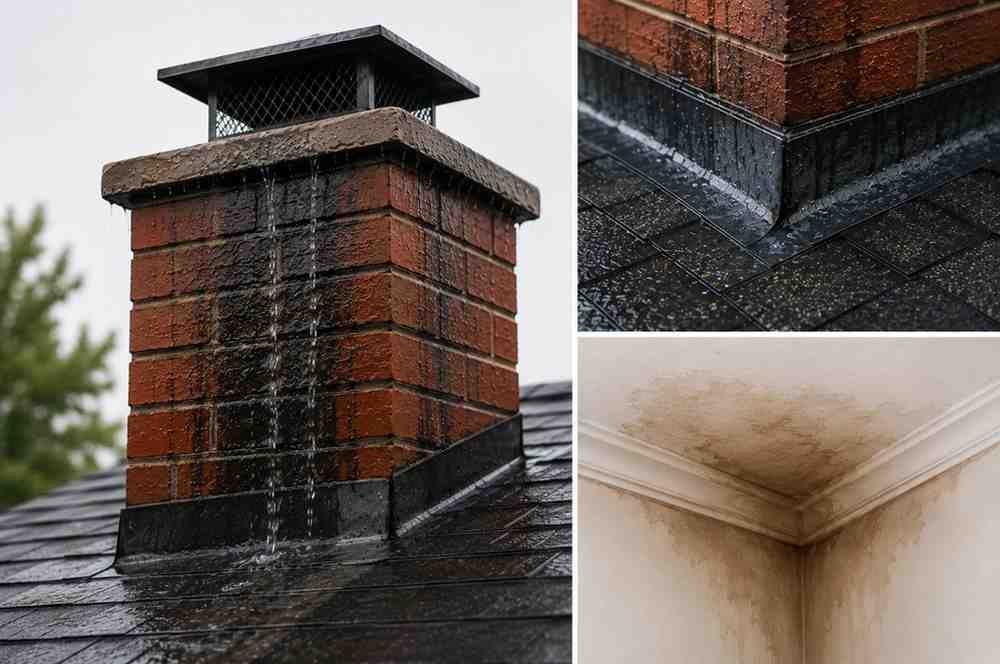
For many homeowners in Johns Creek, the sound of rain against the roof is usually a soothing experience until you notice a persistent drip coming from your fireplace or a damp stain spreading across the ceiling. It is a frustrating and all-too-common scenario: you thought the chimney was fine, or perhaps you recently had work done, yet the moisture returns with every heavy downpour.
Because of Georgia’s humid subtropical climate and frequent heavy thunderstorms, chimneys in our area are subjected to significant environmental stress. Understanding why a chimney continues to leak after a rainstorm requires looking beyond the surface. It involves understanding the complex anatomy of a masonry structure and how various components fail over time.
The Mystery of the Persistent Leak
A chimney is not a single solid block; it is a complex assembly of masonry, metal, and mortar. When one part fails, water finds the path of least resistance. If you are noticing water in your firebox or around the attic rafters, the following issues are likely the culprits.
1. Damaged or Improperly Installed Chimney Flashing
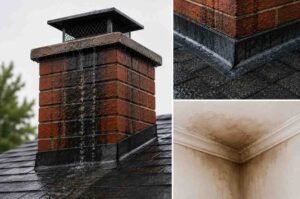
Flashing is the metal transition that connects your chimney to the roofline. It is designed to create a watertight seal at the most vulnerable point of the structure. However, in many homes, the flashing may be rusted, lifting, or improperly sealed with temporary roofing cement rather than a permanent mechanical fix.
If the flashing was not “counter-flashed” (tucked into the mortar joints of the brick), water running down the side of the chimney will simply slide behind the metal and into your home. This is often the primary reason people seek out chimney repair in Johns Creek, as the local wind-driven rain can easily find even the smallest gap in a metal seal.
2. Deteriorated Masonry and “Sponge” Bricks
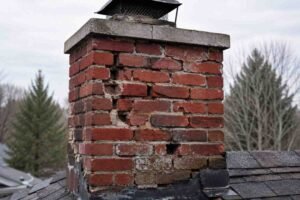
Bricks are naturally porous. Over decades of exposure to Johns Creek’s weather, the face of the brick can begin to wear away. When it rains, the masonry acts like a giant sponge, soaking up gallons of water. Once the brick reaches its saturation point, the moisture has nowhere to go but inward, eventually seeping through to your interior walls.
This process is often accelerated by the “freeze-thaw cycle.” Even in our relatively mild winters, moisture trapped inside the brick can freeze, expand, and cause the brick to crack or “spall.” If your bricks look flaky or have visible cracks, the structural integrity is compromised, and the masonry is no longer shedding water as it should.
3. A Cracked or Compromised Chimney Cap and Crown
The very top of your chimney features two critical lines of defense: the chimney cap (the metal “umbrella” over the flue) and the chimney crown (the concrete slab that covers the top of the brickwork).
The chimney crown is frequently a source of hidden leaks. Many builders use leftover mortar to finish the top of the chimney, which is not designed for weather exposure and eventually cracks. When it rains, water pools in these cracks and travels straight down the middle of the chimney structure. A professional inspection from CFC Clean Fix Chimneys can determine if your crown needs a waterproof resurfacing or a complete rebuild to stop this vertical water entry.
4. Poorly Sealed Chimney Shoulders
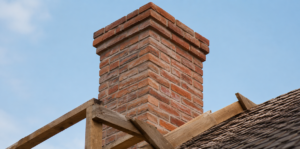
On many traditional chimneys in Georgia, the structure narrows as it rises. The “shoulders” are the sloped areas where the chimney gets thinner. If these slopes are not properly pitched or if the mortar joints in these areas have eroded, water will sit on the ledge and soak into the core of the chimney. Because these areas are lower down the structure, homeowners often mistake these leaks for roofing issues rather than chimney problems.
Why “Quick Fixes” Often Fail
Many homeowners attempt to solve a leak by applying a layer of roofing tar around the base of the chimney. While this might stop the water for a few weeks, it is not a long-term solution. Tar eventually dries out and cracks, creating new channels for water to enter.
Furthermore, simply “cleaning” the chimney won’t stop a leak if the masonry itself is porous. True waterproofing requires breathable sealants that allow internal vapors to escape while preventing liquid water from entering. If the seal is not breathable, moisture becomes trapped inside the brick, leading to even more rapid deterioration.
How to Fix a Leaking Chimney for Good
Solving a persistent leak requires a methodical, multi-step approach. You cannot simply guess where the water is coming from; you must diagnose the system as a whole.
Step 1: Professional Diagnostic Inspection
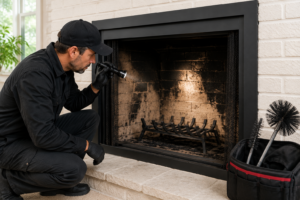
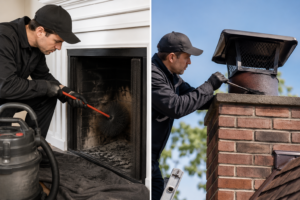
Before spending money on repairs, it is vital to have a Level 2 inspection. This involves using specialized cameras to look inside the flue and a physical check of the exterior masonry, flashing, and crown. This ensures that you are fixing the actual source of the leak rather than just a symptom.
Step 2: Masonry Waterproofing
If the bricks are found to be porous, a professional-grade, vapor-permeable water repellent should be applied. Unlike paint, these treatments penetrate deep into the masonry to provide a hydrophobic barrier that lasts for years. This is a critical preventative measure for any chimney repair in Johns Creek, as it protects the brick from the high humidity levels common in our region.
Step 3: Crown Repair and Flashing Replacement
If the crown is cracked, it must be sealed with a flexible, waterproof membrane or rebuilt with reinforced concrete. Simultaneously, if the flashing is the culprit, it should be replaced with high-quality copper or galvanized steel that is properly stepped and counter-flashed into the brickwork.
Step 4: Installing a Full-Width Chimney Cap
If you only have a small flue cap, consider upgrading to a “top-mount” cap that covers the entire chimney crown. This acts like a roof for your chimney, keeping the majority of the rain off the most sensitive parts of the masonry.
The Importance of Timely Action
Water is the single greatest enemy of a masonry chimney. What starts as a small drip in the fireplace can quickly turn into rotted roof decking, mold growth in the attic, and a crumbling chimney stack that becomes a falling hazard.
In a local market like ours, ensuring your home is protected against the elements is an investment in your property value. Delaying chimney repair in Johns Creek only leads to more expensive structural repairs down the road. By addressing the flashing, crown, and masonry porosity now, you can enjoy the next Georgia rainstorm with the peace of mind that your home remains dry and secure.
If your fireplace is still damp after the latest storm, it is time to stop the guesswork. A systematic repair plan is the only way to ensure your chimney remains a beautiful, functional, and safe part of your home for years to come.
Frequently Asked Questions
Why does my chimney leak only during heavy rain?
Heavy downpours often expose “saturation leaks” where porous bricks or a cracked chimney crown soak up water like a sponge. Once the masonry reaches its limit, the moisture seeps through to your interior walls.
Can a roof leak look like a chimney leak?
Yes. Damaged roof shingles or failing flashing near the chimney base often cause water to travel along rafters. Professional chimney repair in Johns Creek includes a thorough inspection to distinguish between roofing and masonry issues.
Is chimney waterproofing a permanent solution for leaks?
Professional-grade waterproofing creates a long-lasting, vapor-permeable barrier that sheds water while letting the brick breathe. While highly effective, it should be reapplied every few years to maintain maximum protection against Georgia’s humid climate.
What are the signs of a chimney crown failure?
Visible cracks on the top concrete slab, dampness in the firebox, or crumbling mortar are major red flags. CFC Clean Fix Chimneys recommends sealing or rebuilding the crown to prevent vertical water penetration.
How much does it cost to fix a leaking chimney?
Costs vary based on whether the issue is simple flashing repair or extensive masonry restoration. Early intervention via chimney repair in Johns Creek prevents minor leaks from turning into expensive structural rebuilds or mold remediation.