There is nothing quite like gathering around a roaring fireplace during a chilly evening. The cracking of the firewood, the ambient glow, and the comforting heat make the fireplace a beloved centerpiece of many homes. However, that cozy fire also initiates a complex chemical process within your venting system. As wood burns, it releases a variety of unburned gases, smoke, water vapor, and hydrocarbon particles. When these airborne combustion byproducts flow up into the relatively cool environment of the flue, they condense along the inner walls of the flue liner, creating a dark, sticky, and highly problematic substance known as creosote.
For many homeowners, what happens above the firebox remains out of sight and out of mind. Unfortunately, neglecting the hidden sections of your exhaust system can pave the way for catastrophic residential structural failures. Accumulated combustion deposits inside your venting structure present a silent, ticking time bomb for your property and your loved ones. Understanding the chemical behavior, identification methods, and risk mitigation strategies associated with these deposits is a fundamental part of responsible homeownership.
Whether you use your fireplace as a primary heating source or just for seasonal ambiance, keeping your exhaust path clean is a matter of critical safety. For local homeowners looking to protect their properties, scheduling a comprehensive Chimney Cleaning in Alpharetta is the first definitive line of defense against these invisible residential hazards. This exhaustive guide explores everything you need to know to recognize the warning signs early, keep your home safe from fires, and ensure your system continues to run flawlessly.
What Is Creosote Buildup?
To effectively manage your home’s fire safety, we must start by answering a foundational question: what is creosote buildup? In simple terms, creosote is a carbonaceous, highly flammable byproduct that accumulates inside venting pipes and masonry flues when wood is burned. It forms when smoke and volatile organic gases cool down too quickly as they travel up the exhaust trunk, changing from a vapor into a solid or semi-liquid deposit on the flue walls.
This substance does not look the same in every system. It typically develops across three distinct structural stages, each presenting a progressively greater hazard to your home:
- Stage 1 (Loose Soot): This initial form looks like a dry, dusty, flaky layer of black soot. It contains high amounts of carbon and is relatively easy to brush away during a standard maintenance session.
- Stage 2 (Sticky Tar): As more unburned smoke condenses, the layer transforms into a thick, sticky, crunchy, or crumbly tar-like deposit. This stage indicates restricted airflow and requires specialized scraping tools to clear completely.
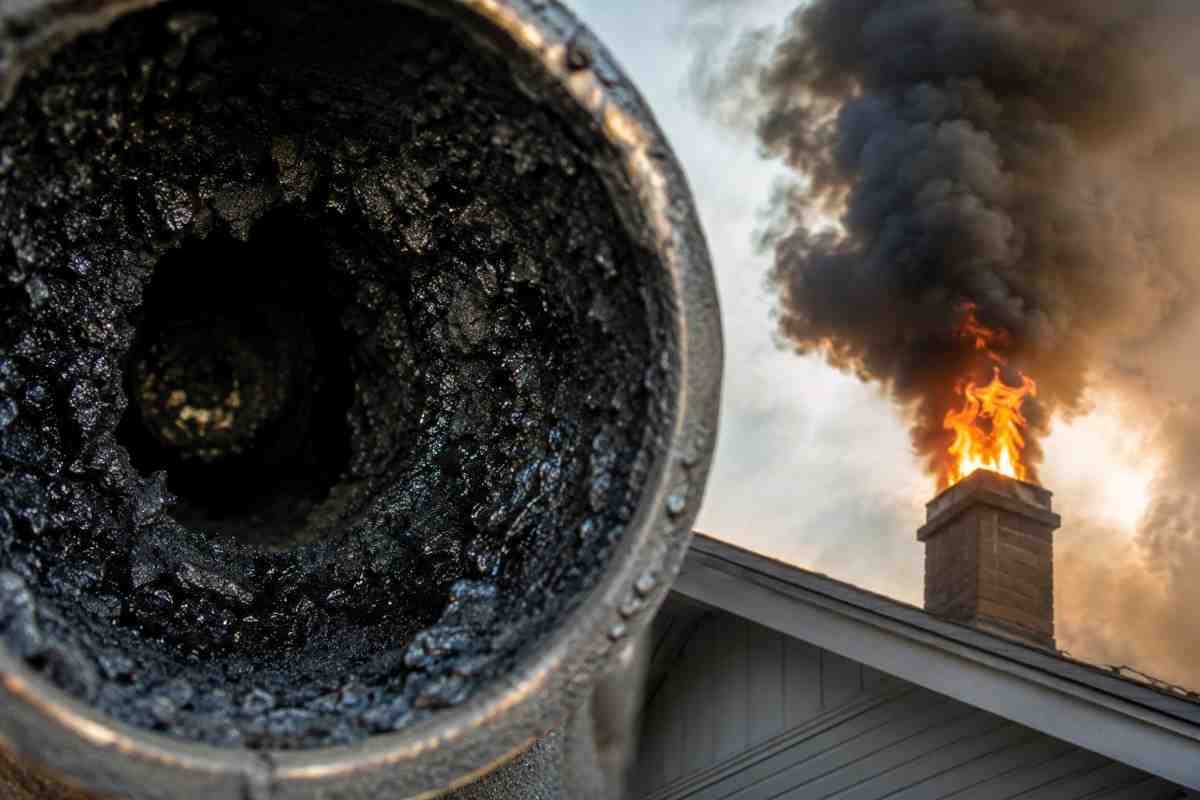
- Stage 3 (Glazed Slag): The most dangerous form looks like a hard, glossy, glass-like black coating baked onto the liner walls. Glazed creosote is extremely concentrated, highly flammable, and incredibly difficult to remove without advanced chemical remediation.
No matter what phase your system is currently in, understanding the compound’s behavior is vital for protecting your property. Left unaddressed, these carbon deposits can choke your exhaust path, causing smoke to back up into your rooms and creating severe operational and health hazards.
Creosote Buildup Dangers Explored
Ignoring the inside of your flue can lead to major structural hazards. The most alarming creosote buildup dangers relate directly to the extreme flammability of the compound. When Stage 3 glaze coats your system, it takes only a single stray spark or an intensely hot fire to ignite the residue inside the flue.
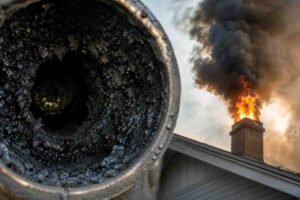
When this happens, it triggers a chimney fire. These hidden fires can burn at temperatures exceeding 2,000°F—hot enough to warp steel liners, crack thick clay tiles, and melt structural mortar. Once the protective liner fails, the intense heat can transfer directly to nearby wooden wall framing, causing a devastating house fire that spreads rapidly through your attic and walls before anyone realizes what is happening.
Beyond the immediate threat of fire, the dangers of creosote in chimney tracks can completely compromise the everyday comfort of your home. As the sticky layers grow thicker, they narrow the effective diameter of your exhaust pipe. This restriction slows down the exit velocity of rising smoke, creating a sluggish draft that pushes carbon monoxide and toxic smoke back down into your living spaces, endangering your family’s health.
Health Implications: Creosote Health Effects
The hazards of venting deposits extend far beyond structural fire risks; breathing in or coming into direct contact with these compounds can cause significant health issues. Analyzing the specific creosote health effects highlights why keeping your home’s air clean is essential for your family’s well-being.
When a blocked exhaust path pushes smoky air back into your home, it releases fine particulate matter that can cause severe respiratory irritation, coughing spells, and aggravate chronic conditions like asthma or bronchitis. Direct skin exposure to these acidic soot particles can cause painful rashes and chemical burns. Furthermore, medical research has classified these concentrated wood-smoke hydrocarbons as known carcinogens, meaning long-term exposure can lead to serious respiratory illness and cellular damage.
Recognizing Creosote Buildup Symptoms
Catching a problem early can save your property from severe damage. Homeowners should look out for these common creosote buildup symptoms during everyday fireplace use:
- Sluggish drafting and smoke backdrafts: If smoke spills out into your living room instead of rising cleanly up the flue when you open the damper, your exhaust path is heavily restricted.
- A strong, smoky, or asphalt-like odor: A distinct, heavy, burnt-wood odor coming from the fireplace when it is not in use indicates a thick layer of soot inside the flue.
- An unusually loud, roaring sound during a fire: Hearing a rumbling sound that sounds like a distant freight train or jet engine inside your walls means you are likely experiencing a dangerous chimney fire.
- Visible dark, thick crust around the flue terminal: Seeing heavy, bubbly, black residue around your rooftop cap or crown means your system is heavily contaminated with Stage 3 glaze.
If you notice any of these warnings, stop using your fireplace immediately until a certified professional can inspect the system and restore safe airflow.
How to Prevent Creosote Buildup
Fortunately, you can minimize these risks by adopting smart burning habits. Learning how to prevent creosote buildup involves controlling your fire’s combustion efficiency and managing moisture levels.
The most effective prevention strategy is to avoid burning wet wood creosote buildup fuels. When you burn unseasoned, green, or damp wood, the fire must waste its thermal energy boiling off the trapped water inside the logs. This lowers the overall combustion temperature and produces dense, wet smoke that cools instantly as it rises, accelerating the formation of sticky tar along your flue walls. Always burn dry wood that has been split and seasoned for at least six to twelve months, keeping its moisture content below 20%.
Additionally, avoid burning resin-heavy softwoods like pine, never overload your firebox with unmanageable amounts of fuel, and keep your damper completely open during operation to maintain a steady draft. Ensuring a clean, high-temperature burn prevents smoke from stalling and condensing inside your venting paths.
Professional Creosote Removal Strategies
Once thick carbon deposits stick to your liner, learning how to remove creosote safely requires specialized equipment and expert techniques. Standard consumer brush kits cannot cut through Stage 2 tar or Stage 3 glazed slag, and using amateur cleaning methods can end up scratching and damaging your internal lining.
To deal with severe blockages, booking a professional chimney sweep creosote removal session is essential. Certified technicians use rotary power sweeping tools and specialized chemical sprays to break down and lift away the toughest glazed deposits without compromising the structural integrity of your flue. Investing in a professional creosote removal service safely restores your system’s airflow and guarantees your home remains fully protected against hidden fire risks.
The Importance of Local Professional Care
Maintaining a safe fireplace requires precision care, special safety gear, and a deep understanding of thermodynamics and fire codes. Homeowners should never compromise on safety when it comes to managing high-temperature systems inside their walls.
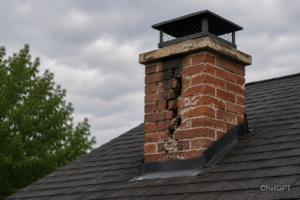
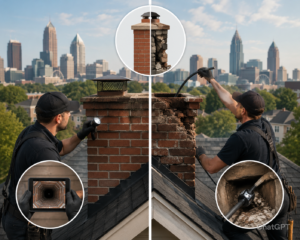
For regional property owners, scheduling a seasonal inspection with an expert Chimney Sweep in Alpharetta is the best way to catch hidden vulnerabilities before they turn into expensive structural emergencies. A certified sweep uses high-definition inspection cameras to view your system from top to bottom, spotting hairline cracks, missing mortar, and dangerous glaze accumulation with absolute clarity.
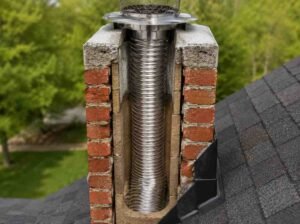
When systems face heavy, long-term buildup, executing a deep Chimney Cleaning in Alpharetta removes toxic blockages and restores your system’s draft performance. If a long-term leak or a past chimney fire has caused severe structural damage, partnering with an experienced local team for reliable Chimney Sweep in Alpharetta restorations allows you to apply fresh mortar, replace damaged clay liners, and keep your home safe for decades.
Conclusion
Letting creosote build up inside your flue compromises your home’s energy efficiency, ruins indoor air quality, and creates a severe, invisible fire hazard behind your walls. By using well-seasoned wood, maintaining high-temperature fires, and recognizing the early warning signs of a blockage, you can take control of your system’s performance. Combining smart burning habits with regular professional care ensures your fireplace remains a safe, warm, and inviting feature for your family.
When it is time to inspect, clean, or repair your home’s venting systems, trust the experienced professionals at CFC Clean Fix Chimneys. Our dedicated team specializes in comprehensive inspections, precision care, and emergency Chimney Sweep in Alpharetta solutions designed to keep your home warm and secure. We use advanced rotary sweeping gear and premium materials to deliver pristine, leak-free results. Do not let hidden soot compromise your family’s safety this winter, contact CFC Clean Fix Chimneys today to arrange your professional on-site estimate and detailed ventilation report.
Frequently Asked Questions
What are the hidden health dangers of creosote exposure at home?
Exposure to trapped combustion deposits triggers severe creosote health effects, including respiratory irritation, coughing, and aggravated asthma. Direct skin contact can cause painful chemical burns and rashes, while long-term inhalation of toxic wood-smoke hydrocarbons carries known cancer-causing risks.
How does creosote buildup lead to devastating chimney fires?
Aluminum liners work well for standard gas appliances, but stainless steel provides superior durability. Gas fires generate low heat but produce highly acidic moisture condensation, meaning a tightly sealed, corrosion-resistant alloy liner is required to prevent masonry decay.
What are the warning signs of dangerous creosote in a chimney?
Watch out for critical creosote buildup symptoms like a sluggish exhaust draft pushing smoke into rooms, a heavy asphalt-like odor when your fireplace is cold, or a loud, roaring freight-train sound coming from behind your living room walls.
What role does wet and unseasoned firewood play in creosote formation?
Burning unseasoned logs creates heavy wet wood creosote buildup. Damp wood wastes thermal energy boiling off trapped internal moisture, which dramatically drops the combustion temperature and causes dense, unburned tar vapors to instantly condense along cool chimney tile walls.
How can I prevent creosote buildup with proper burning habits?
Protect your ventilation system by learning how to prevent creosote buildup at the source. Always burn seasoned hardwoods dried for six to twelve months, keep your damper completely open for maximum airflow, and maintain hot, efficient fires.